
2017 national electrical code pdf
2017 National Electrical Code (NEC) PDF: A Comprehensive Plan
Accessing the 2017 NEC PDF involves utilizing resources like StudyLib and PDF Standards Shop, offering digital versions of the handbook.
These platforms provide convenient access to crucial electrical code information, aiding professionals and students alike in understanding and applying safety regulations.
Images available showcase the handbook’s cover and internal pages, confirming its availability in digital format for easy reference and study.
The 2017 National Electrical Code (NEC) represents a pivotal update in electrical safety standards, building upon decades of established practices. Its primary goal remains the practical safeguarding of people and property from hazards arising from the use of electricity. This edition, available as a PDF for convenient access, incorporates numerous revisions and additions based on evolving technologies and real-world experiences.
Understanding the NEC is crucial for electricians, engineers, inspectors, and anyone involved in electrical installations or maintenance. The code details requirements for everything from wiring methods and overcurrent protection to grounding and emergency systems. The 2017 NEC PDF format facilitates easy searching and referencing of specific articles and sections, streamlining workflow and ensuring compliance.

Resources like StudyLib and PDF Standards Shop offer digital access to the handbook, making it readily available for professionals needing to stay current with the latest regulations. The code’s comprehensive nature demands diligent study and application to maintain electrical safety standards.
II. Where to Find the 2017 NEC PDF
Locating the 2017 NEC PDF is readily achievable through several online resources. StudyLib emerges as a prominent platform, hosting the complete handbook and offering convenient access to its contents. Their website provides a digital version, allowing users to view and download the document. Similarly, PDF Standards Shop also provides access to the 2017 NEC handbook in PDF format, alongside related electrical code materials.
These platforms often present the PDF alongside images of the handbook’s cover and sample pages, confirming authenticity. While some sites may require registration or a subscription, the accessibility of the 2017 NEC is significantly enhanced by these digital repositories. Always verify the source to ensure you are utilizing a legitimate and up-to-date version of the code.
III. Understanding the NEC Handbook
The 2017 NEC Handbook serves as an invaluable companion to the National Electrical Code itself, offering detailed explanations and interpretations of the code’s requirements. It’s not a replacement for the NEC, but rather a tool to enhance understanding and ensure correct application of the rules. The handbook clarifies complex sections, providing commentary and examples to aid professionals and students.
Digital versions, readily available as PDFs through platforms like StudyLib and PDF Standards Shop, make the handbook exceptionally portable and searchable. Understanding the handbook’s structure and how it correlates to specific NEC articles is crucial for effective use. It’s designed to assist in navigating the code and applying it to real-world electrical installations safely and correctly.

III.a. Purpose of the Handbook
The primary purpose of the 2017 NEC Handbook is to provide comprehensive explanations and interpretations of the National Electrical Code’s provisions. It’s designed to bridge the gap between the concise language of the code and the practical application of electrical installations. The handbook doesn’t change the code itself; instead, it clarifies the intent behind the rules, offering guidance on how to comply with them effectively.
Available as a PDF through resources like StudyLib, the handbook assists electricians, inspectors, and engineers in understanding complex regulations; It aims to reduce misinterpretations and ensure consistent application of safety standards. Ultimately, the handbook’s purpose is to promote electrical safety and minimize risks associated with electrical work, supporting informed decision-making.
III.b. Key Features of the 2017 Handbook
The 2017 NEC Handbook, accessible in PDF format via platforms like StudyLib and PDF Standards Shop, boasts several key features. These include detailed commentary explaining the reasoning behind code rules, illustrative examples demonstrating practical applications, and cross-references linking related sections. Visual aids, such as diagrams and images from the handbook previews, enhance understanding.
Furthermore, the handbook provides insights into the code change proposals and the rationale behind their adoption or rejection. It offers a structured approach to navigating the complex code requirements, making it an invaluable resource for professionals. The digital PDF format allows for easy searching and portability, ensuring quick access to critical information on the job site or during study.
IV; Article 100: Definitions
Article 100 of the 2017 NEC, readily available within the digital PDF versions found on resources like StudyLib, is fundamentally crucial. It establishes a standardized set of definitions for terms used throughout the code. This ensures consistent interpretation and application of the electrical regulations across all installations.

Understanding these definitions is paramount for anyone working with the NEC. The handbook’s commentary, accessible in the PDF, clarifies ambiguous terms and provides context for their usage. Precise definitions minimize misunderstandings and promote safety. The article covers a broad range of electrical concepts, from amperage to grounding, forming the bedrock of code compliance. Accessing this article within the 2017 NEC PDF is essential for accurate code interpretation.

V. Article 110: Requirements for Electrical Installations
Article 110, detailed within the 2017 NEC PDF accessible through platforms like StudyLib, outlines fundamental requirements for all electrical installations. It establishes general rules concerning the proper construction and installation of electrical equipment to ensure safety and reliability.
Key aspects covered include workspace requirements, adequate working clearances, and the necessity for proper identification of electrical parts. The PDF version allows for easy referencing of specific sections related to installation conditions and equipment suitability. This article emphasizes the importance of listed and labeled equipment, ensuring components meet established safety standards. Understanding Article 110, as presented in the digital handbook, is vital for compliant and safe electrical work.
V.a. Listing and Labeling
The 2017 NEC, readily available as a PDF via resources like StudyLib, dedicates significant attention to listing and labeling in Article 110. This crucial aspect ensures all electrical equipment used in installations has been evaluated and meets nationally recognized safety standards. Listing signifies evaluation by a testing laboratory (like UL), while labeling indicates the equipment’s compliance with those standards.
The NEC PDF clarifies that only listed and labeled equipment should be installed, preventing hazards associated with unapproved components. Proper labeling provides essential information regarding voltage, current, and other critical parameters. This section emphasizes the installer’s responsibility to verify listing marks and ensure they are intact and legible, guaranteeing a safe and code-compliant electrical system.
V.b. Installation Conditions
The 2017 NEC PDF, accessible through platforms like StudyLib, meticulously details installation conditions within Article 110. These conditions dictate how electrical equipment must be installed to maintain safety and functionality. The NEC emphasizes that equipment must be installed in accordance with its listing and labeling, meaning the environment and manner of installation must align with the manufacturer’s specifications.
The code addresses factors like ambient temperature, altitude, and the presence of flammable materials. Improper installation, even with listed equipment, can create hazards. The PDF stresses the importance of following manufacturer’s instructions and adhering to NEC guidelines to ensure a safe and reliable electrical installation. Ignoring these conditions voids warranties and potentially compromises safety.
VI. Article 200: General Requirements
The 2017 NEC PDF, readily available online, outlines fundamental general requirements in Article 200, establishing a baseline for safe electrical installations. These requirements cover a broad spectrum, including wiring methods, protection of conductors, and the overall design of electrical systems. The NEC emphasizes the need for neat and workmanlike installations, ensuring accessibility for future maintenance and modifications.
Article 200 details rules regarding conductor identification, requiring clear labeling to prevent confusion during servicing. The PDF highlights the importance of using approved wiring methods and ensuring adequate support for conductors to prevent damage. Adherence to these general requirements is crucial for minimizing hazards and ensuring the long-term reliability of electrical systems, as detailed within the comprehensive code documentation.
VII. Article 210: Branch Circuits
The 2017 NEC PDF comprehensively addresses branch circuit requirements in Article 210, a critical section for ensuring safe and functional electrical systems. This article dictates the sizing and protection of branch circuits based on the anticipated load, preventing overloads and potential fire hazards. The NEC specifies requirements for general-purpose circuits, appliance circuits, and dedicated circuits for specific equipment.
The PDF details rules for receptacle outlet spacing, ensuring convenient access to power throughout a building. Article 210 also covers ground-fault circuit interrupter (GFCI) and arc-fault circuit interrupter (AFCI) protection, vital for safeguarding against electrical shock and arc-related fires. Understanding these branch circuit rules, as outlined in the 2017 NEC, is paramount for electrical professionals and installers.
VII.a. General Branch Circuit Requirements
The 2017 NEC PDF outlines general branch circuit requirements in detail, establishing foundational safety standards. These requirements cover circuit capacity, conductor sizing, and overcurrent protection, ensuring circuits can handle anticipated loads without overheating or causing hazards. The PDF emphasizes the importance of calculating loads accurately to determine appropriate circuit ampacities.
Furthermore, the document specifies rules for branch circuit terminations, wiring methods, and support, guaranteeing physical integrity and preventing damage. The NEC mandates the use of approved devices and fittings, promoting compatibility and reliability. Understanding these general requirements, readily available within the 2017 NEC PDF, is crucial for any electrical installation, forming the basis for a safe and code-compliant system.
VII.b. Specific Branch Circuit Requirements
The 2017 NEC PDF details specific branch circuit requirements for various applications, extending beyond general guidelines. These specifications address dedicated circuits for appliances like refrigerators, freezers, and laundry equipment, ensuring reliable operation and preventing overloads on shared circuits. The document outlines requirements for bathroom receptacle circuits, mandating GFCI protection for safety near water sources.
Moreover, the NEC PDF provides detailed rules for kitchen, dining room, and garage circuits, accounting for higher load densities and potential hazards. It specifies requirements for lighting circuits, including control of switches and the use of appropriate wiring methods. Accessing these specific requirements within the 2017 NEC PDF is vital for ensuring installations meet the unique demands of each space and appliance, maximizing safety and functionality.
VIII. Article 220: Load Calculations
The 2017 NEC PDF dedicates Article 220 to comprehensive load calculations, a critical step in designing safe and effective electrical systems. This section details methods for determining the total electrical demand of a building, considering various factors like general lighting, receptacle outlets, and fixed appliances. The PDF clarifies how to calculate loads for dwelling units, multi-family buildings, and commercial occupancies, providing specific formulas and guidelines.
Understanding these calculations, as outlined in the NEC PDF, is essential for correctly sizing service entrance conductors, overcurrent protection devices, and branch circuit conductors. Accurate load calculations prevent overloading, minimize voltage drop, and ensure the electrical system can reliably handle anticipated demands. The document emphasizes the importance of accounting for future expansion and potential load increases.
IX. Article 230: Class 1, Class 2, and Class 3 Remote-Control, Signaling, and Power-Limited Circuits
The 2017 NEC PDF meticulously addresses Class 1, Class 2, and Class 3 circuits in Article 230, crucial for low-voltage systems. These circuits, used for remote control, signaling, and limited power applications, require specific wiring methods and protection to ensure safety and prevent hazards. The PDF details voltage limitations, conductor requirements, and acceptable applications for each class.
Understanding the distinctions between these classifications, as detailed within the NEC PDF, is vital for proper installation and compliance. Class 2 circuits, for example, often involve fire alarm systems and require stringent protection against fault currents. The document outlines specific requirements for insulation, grounding, and overcurrent protection, minimizing risks associated with these sensitive systems. Proper implementation, guided by the NEC PDF, safeguards both people and property.
X. Article 240: Overcurrent Protection
The 2017 NEC PDF dedicates Article 240 to the critical subject of overcurrent protection, encompassing circuit breakers and fuses. This section details the requirements for protecting electrical systems from damage caused by excessive current flow, a primary safety concern. The PDF clarifies sizing requirements, application guidelines, and proper installation techniques for these protective devices.

Detailed within the NEC PDF are specifications for different types of circuit breakers and fuses, ensuring appropriate selection for specific loads and circuit characteristics. Understanding the interrupting ratings and trip curves is paramount, as outlined in the document. Proper overcurrent protection, as dictated by the NEC PDF, prevents overheating, fire hazards, and equipment failure, safeguarding electrical systems and personnel; Compliance with Article 240 is non-negotiable for safe and reliable electrical installations.
X.a. Circuit Breakers
The 2017 NEC PDF extensively covers circuit breakers within Article 240, detailing their application and requirements. It specifies types – thermal, magnetic, and thermal-magnetic – and their respective tripping characteristics. The PDF emphasizes proper selection based on load type and circuit parameters, ensuring effective overcurrent protection. Detailed are rules for breaker sizing, considering conductor ampacity and equipment ratings.
NEC guidelines within the PDF address breaker placement, accessibility, and labeling for safe operation and maintenance. Furthermore, the document clarifies requirements for arc-fault circuit interrupters (AFCIs) and ground-fault circuit interrupters (GFCIs), crucial for preventing electrical fires and shocks. Understanding these specifications, as presented in the 2017 NEC PDF, is vital for electrical professionals to ensure compliant and safe installations. Proper breaker selection and installation are paramount for system reliability.
X.b. Fuses
The 2017 NEC PDF dedicates significant attention to fuses as overcurrent protection devices, outlined within Article 240. It details various fuse types – cartridge, time-delay, and expulsion – and their application suitability. The PDF stresses the importance of using fuses with appropriate voltage and amperage ratings, matching conductor ampacity and protected equipment. Specific rules govern fuse placement, accessibility, and replacement procedures for safety.
NEC guidelines within the PDF clarify requirements for dual-element fuses and their ability to handle temporary overloads. Furthermore, the document addresses the use of fuse disconnects and their proper labeling. Understanding these specifications, as detailed in the 2017 NEC PDF, is crucial for electrical professionals. Correct fuse selection and installation are essential for preventing electrical hazards and ensuring system protection. Compliance with NEC standards guarantees a safe and reliable electrical system.
XI. Article 250: Grounding and Bonding
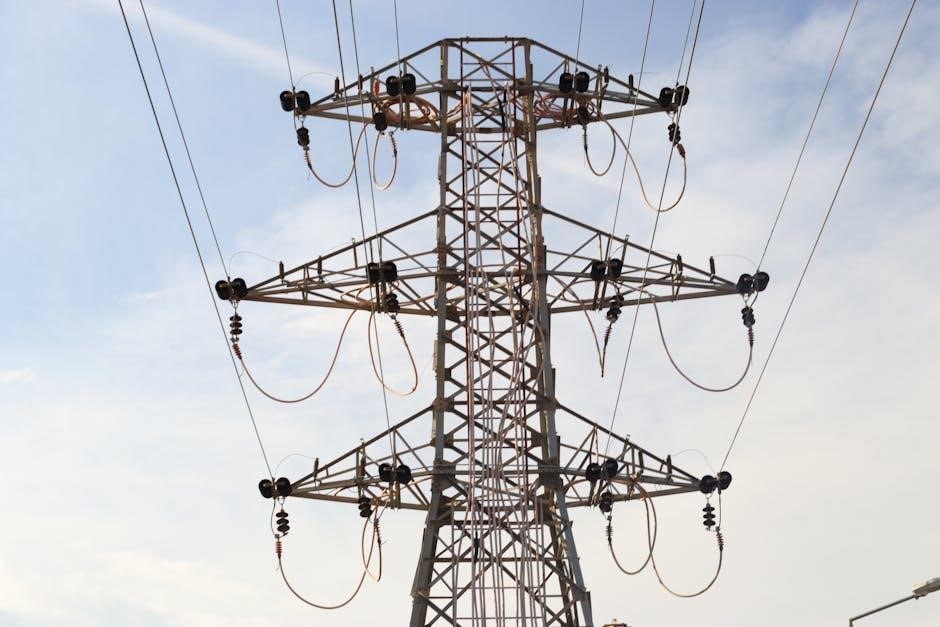
The 2017 NEC PDF extensively covers grounding and bonding in Article 250, vital for electrical safety. It defines grounding as connecting to earth, while bonding connects metallic parts to create a low-impedance path. The PDF details requirements for grounding electrode systems, including rods, pipes, and concrete-encased electrodes. Specific rules govern equipment grounding conductors and their sizing based on overcurrent protection.
NEC guidelines within the PDF address bonding of metal water pipes, gas pipes, and structural steel. Furthermore, the document clarifies requirements for separately derived systems and transformer bonding. Understanding these specifications, as detailed in the 2017 NEC PDF, is crucial for minimizing shock hazards. Proper grounding and bonding ensure fault currents return safely to the source. Compliance with NEC standards guarantees a safe and reliable electrical system.
XII. Article 300: Wiring Methods
The 2017 NEC PDF’s Article 300 details acceptable wiring methods, crucial for safe installations. It covers raceways – rigid metal conduit, intermediate metal conduit, and electrical metallic tubing – outlining fill capacities and support requirements. The PDF also addresses cable installations, including armored cable (AC) and nonmetallic-sheathed cable (NM), specifying securement and protection.
NEC guidelines within the PDF detail open wiring methods and the use of cable trays. Furthermore, it clarifies rules for wiring in concealed spaces and the protection of conductors from physical damage. Understanding these specifications, as detailed in the 2017 NEC PDF, is vital for preventing shorts and fires. Proper wiring method selection ensures long-term reliability. Compliance with NEC standards guarantees a safe and durable electrical system.
XIII. Article 310: Conductors for General Wiring
The 2017 NEC PDF’s Article 310 focuses on conductor properties and applications for general wiring. It specifies allowable ampacities for various conductor materials – copper and aluminum – based on insulation type and ambient temperature. The PDF details conductor identification codes, ensuring correct selection for specific applications. Understanding conductor size is critical to prevent overheating and potential fire hazards.
NEC guidelines within the PDF address conductor installation requirements, including splicing and termination methods. Furthermore, it clarifies rules for conductor fill in raceways and cable assemblies. Proper conductor selection, as detailed in the 2017 NEC PDF, is vital for system efficiency. Compliance with NEC standards guarantees a safe and reliable electrical system. Detailed tables within the PDF provide ampacity adjustments for various conditions.
XIV. Article 314: Drip Loop and Support
The 2017 NEC PDF’s Article 314 addresses the crucial aspects of supporting and securing conductors in wet locations. Specifically, it mandates the creation of drip loops to prevent moisture from traveling along conductors and entering equipment enclosures. This provision, detailed within the PDF, is a key safety measure. Support requirements are outlined, specifying appropriate spacing for various conductor types and sizes.
The PDF clarifies acceptable support materials and methods, ensuring conductors are adequately secured against tension and vibration. Proper support prevents damage to insulation and maintains system reliability. Furthermore, Article 314 details rules for supporting cables and raceways, including securing them to building structures. Adherence to these guidelines, as presented in the 2017 NEC PDF, minimizes the risk of electrical hazards and ensures long-term system integrity;
XV. Article 330: Single Conductors
The 2017 NEC PDF’s Article 330 comprehensively covers the installation of single conductors, detailing requirements for their use in various applications. It specifies acceptable insulation types and voltage ratings for different environments. The PDF outlines rules for supporting single conductors, ensuring they are adequately secured to prevent sagging or damage. Furthermore, it addresses the proper methods for splicing and terminating single conductors, emphasizing the importance of maintaining insulation integrity.

Detailed within the PDF are guidelines for using single conductors in wet locations, requiring appropriate waterproof fittings and sealing methods. Article 330 also covers the use of single conductors in hazardous locations, specifying explosion-proof fittings and conduit requirements. Compliance with these regulations, as presented in the 2017 NEC PDF, is crucial for ensuring electrical safety and preventing potential hazards.
XVI. Article 408: Switchboards and Panelboards
The 2017 NEC PDF’s Article 408 meticulously details the construction and installation requirements for switchboards and panelboards, vital components of electrical distribution systems. It specifies standards for adequate clearances around live parts, ensuring worker safety during maintenance and operation. The PDF outlines rules for busbar ratings, overcurrent protection, and the proper mounting of these essential devices. Furthermore, it addresses requirements for labeling and identification, promoting clear understanding of circuit functions.

Detailed within the PDF are guidelines for enclosure types, ensuring protection against environmental factors and physical damage. Article 408 also covers the grounding and bonding of switchboards and panelboards, crucial for fault current paths. Compliance with these regulations, as presented in the 2017 NEC PDF, is paramount for reliable and safe electrical power distribution.
XVII. Article 422: Appliances
The 2017 NEC PDF’s Article 422 focuses on the installation of appliances, encompassing a wide range of devices from cooking equipment to washing machines. It details specific requirements for appliance connections, including proper grounding and overcurrent protection, ensuring safe operation. The PDF outlines rules for cord and plug connections, as well as permanently connected appliances, addressing potential hazards. Furthermore, it specifies clearances around appliances to prevent fire risks and facilitate maintenance.
Detailed within the PDF are guidelines for appliance installation in wet locations, requiring appropriate enclosure types and GFCI protection. Article 422 also covers the installation of specific appliance types, like electric dryers and ranges, with unique requirements. Compliance with these regulations, as presented in the 2017 NEC PDF, is essential for preventing electrical shocks and fires related to appliance usage.
XVIII. Article 430: Motors, Motor Circuits, and Controllers
The 2017 NEC PDF’s Article 430 comprehensively addresses the electrical installation of motors, motor circuits, and their associated controllers. It details requirements for motor overload protection, ensuring motors aren’t damaged by excessive current draw. The PDF specifies conductor sizing based on motor horsepower and voltage, crucial for safe and efficient operation. Furthermore, it outlines rules for motor circuit disconnects, allowing for safe maintenance and emergency shutdown.
Detailed within the PDF are guidelines for motor control centers and the installation of variable frequency drives (VFDs). Article 430 also covers the grounding of motor circuits and the selection of appropriate overcurrent devices. Compliance with these regulations, as presented in the 2017 NEC PDF, is vital for preventing motor failures, fires, and ensuring personnel safety when working with industrial and commercial motor systems.
XIX. Article 440: Structures and Equipment

The 2017 NEC PDF’s Article 440 focuses on electrical installations related to various structures and equipment, extending beyond typical wiring. It covers requirements for hazardous locations, detailing specific wiring methods and equipment suitable for flammable or explosive environments. The PDF outlines rules for electrical installations on roofs, including clearances and protection against physical damage. Furthermore, it addresses electrical systems associated with swimming pools, spas, and hot tubs, prioritizing safety around water.
Detailed within the document are guidelines for electrical installations in agricultural buildings and on metal structures, ensuring proper grounding and bonding. Article 440 also covers emergency and standby systems, vital for maintaining power during outages. Compliance with these regulations, as detailed in the 2017 NEC PDF, is essential for protecting life and property in diverse structural and equipment applications.
XX. Article 510: Dwellings
The 2017 NEC PDF’s Article 510 is dedicated to electrical installations within dwelling units – homes and similar residential spaces. It establishes specific requirements for branch circuits, ensuring adequate power distribution for common household appliances and lighting. The PDF details rules for ground-fault circuit interrupter (GFCI) protection in bathrooms, kitchens, and outdoor areas, enhancing safety against electrical shock. Furthermore, it addresses arc-fault circuit interrupter (AFCI) protection, mitigating fire hazards caused by arcing faults.
Detailed within the document are guidelines for smoke detection systems, including wiring methods and placement requirements. Article 510 also covers electrical installations in garages and unfinished basements, accounting for unique environmental conditions. Compliance with these regulations, as outlined in the 2017 NEC PDF, is crucial for ensuring the safety and reliability of electrical systems in residential settings.
XXI. Common Updates and Changes in the 2017 NEC
The 2017 NEC PDF incorporated several key updates from previous editions, focusing on enhanced safety and technological advancements. Notably, revisions were made to GFCI and AFCI requirements, expanding protection to previously unprotected areas. The PDF details changes regarding energy-efficient lighting systems, aligning with evolving energy conservation standards. Updates also addressed the increasing use of photovoltaic (PV) systems, providing clearer guidelines for installation and interconnection.
Significant modifications were made to Article 310 concerning conductor sizing, improving ampacity calculations for modern wiring configurations. The 2017 edition also clarified requirements for emergency disconnects for one- and two-family dwellings. Accessing the complete list of changes within the 2017 NEC PDF is vital for electrical professionals to maintain compliance and ensure safe installations.
XXII. Resources and Further Information
For accessing the 2017 NEC PDF and supplementary materials, several online resources prove invaluable. StudyLib and PDF Standards Shop offer digital versions of the handbook, alongside related documentation. Additionally, the National Fire Protection Association (NFPA) website provides official NEC information, including errata and interpretations. Online forums and communities dedicated to electrical professionals facilitate discussions and knowledge sharing regarding the code.
Furthermore, electrical trade schools and continuing education providers offer courses based on the 2017 NEC, enhancing understanding and practical application. Utilizing these resources ensures professionals remain current with code requirements and best practices. Remember to always consult the official NFPA documentation for the most accurate and up-to-date information regarding the 2017 NEC PDF.