wii manual troubleshooting
Wii Manual Troubleshooting: A Comprehensive Guide (Updated 04/07/2026)
Navigating the world of Nintendo Wii can sometimes present challenges, requiring diligent troubleshooting for optimal performance. This guide, updated today, 04/07/2026, aims to resolve common issues.
Welcome to the essential guide for resolving issues with your Nintendo Wii! This section lays the groundwork for understanding and tackling common problems that may arise during gameplay or system operation. The Wii, while a beloved console, isn’t immune to technical hiccups, ranging from connectivity errors to disc read failures and remote syncing difficulties.
Effective troubleshooting begins with recognizing that errors often have logical explanations. Many issues stem from simple configuration problems, outdated software, or even environmental factors like sensor bar placement. This guide will empower you to systematically diagnose and address these concerns, minimizing frustration and maximizing your enjoyment. We’ll cover a spectrum of error codes, including 50299, 51030, 51330, and 52030, alongside solutions for billing address issues (like error 208002) and hardware-related problems. Remember, a methodical approach is key to a successful resolution!
Common Wii Problems & Overview
Numerous issues can affect the Wii experience. Frequent complaints include difficulties connecting to wireless networks, manifesting as error code 51030, often due to network incompatibility or range limitations. Connection problems, represented by error 51330, can arise from firewall settings or internet service provider disruptions. Network configuration errors (52030) frequently involve incorrect IP address settings.
Beyond networking, disc read errors are prevalent, potentially caused by scratched discs or a failing optical drive. Billing address issues, signaled by error 208002, typically relate to credit card information discrepancies. Hardware problems encompass Wii Remote syncing failures, low battery life, and sensor bar malfunctions. System freezes and failed software updates also occur. This overview highlights the breadth of potential problems, setting the stage for detailed troubleshooting steps in subsequent sections. Addressing these issues promptly ensures continued enjoyment of your Wii console.
Understanding Wii Error Codes
Wii error codes are the console’s way of communicating specific problems, acting as crucial diagnostic tools. These codes, often appearing during gameplay or system operations, pinpoint the source of the issue, guiding troubleshooting efforts. Codes like 50299, 51030, 51330, and 52030 relate to network connectivity, indicating problems with wireless configuration, network access, or billing information.
Decoding these codes is essential; for example, 51030 suggests a lack of configured wireless networks within range. Error 208002 specifically points to billing address discrepancies. Understanding the code’s meaning drastically reduces diagnostic time. While numerous codes exist, they generally fall into categories: network, system, disc read, and billing. Recognizing these patterns allows for a more systematic approach to resolving Wii issues, ultimately restoring functionality and enjoyment.
Error Code 50299: Troubleshooting Steps
Encountering Error Code 50299 typically indicates a problem with the Wii’s connection to Nintendo Wi-Fi Connection servers. Initial steps involve verifying your internet connection; ensure your router is functioning correctly and that other devices can access the internet. Restart both your Wii console and your wireless router – a simple reboot often resolves temporary glitches.
Next, double-check your Wii’s internet settings, confirming the correct SSID and password are entered. If problems persist, attempt a connection test within the Wii’s system settings. Consider temporarily disabling any firewall settings on your router, as these can sometimes interfere with the connection. If the issue remains unresolved, Nintendo’s support website offers further guidance and potential solutions specific to this error code, potentially involving DNS settings or server status checks.
Error Code 51030: Wireless Network Issues
Error Code 51030 specifically points to problems establishing a connection with a wireless network. The Wii is unable to detect a configured network within range, or the network isn’t compatible with the console’s settings. Begin by verifying your wireless router is broadcasting a signal and that the Wii is within a reasonable distance. Confirm the SSID (network name) is correctly entered in the Wii’s settings, paying attention to capitalization.
Ensure your router’s security settings (WEP, WPA, WPA2) are compatible with the Wii. Try temporarily disabling security to test if that’s the issue, but re-enable it afterward for security reasons. Interference from other devices can also cause problems; move the router away from potential sources. If issues continue, consult your router’s manual or contact your internet service provider for assistance.
Error Code 51330: Connection Problems
Encountering Error Code 51330 indicates a general connection failure during communication with Nintendo’s servers. This can manifest during online gameplay, WiiConnect24 features, or system updates. First, confirm your internet connection is active and functioning correctly on other devices. Restart both your Wii console and your wireless router – a simple reboot often resolves temporary glitches.
Check Nintendo’s server status online to rule out widespread outages. If the servers are operational, verify your Wii’s date and time settings are accurate, as incorrect settings can disrupt connections. Consider temporarily disabling any firewall or security software on your router that might be blocking the Wii’s access. Finally, ensure your Wii’s system software is up-to-date, as updates often include connection fixes.
Error Code 52030: Network Configuration Errors
Receiving Error Code 52030 signifies issues with your Wii’s network settings, preventing a successful connection to the internet. This often arises after changing router settings or attempting to connect to a new network. Begin by re-entering your wireless network password carefully, ensuring accuracy – even a single incorrect character can cause this error.
Within the Wii’s system settings, try manually configuring your network settings instead of relying on automatic detection. You’ll need your router’s IP address, subnet mask, and DNS server addresses. If you’re unsure of these values, consult your router’s documentation or your internet service provider. A factory reset of your Wii’s network settings, followed by a fresh configuration, can also resolve persistent issues.
Disc Read Errors & Solutions
Encountering disc read errors on your Wii is a frustrating, yet common, problem. These errors prevent the console from properly accessing game discs, often displaying messages indicating the disc is dirty or damaged. First, thoroughly clean the disc with a soft, lint-free cloth, wiping from the center outwards in a straight line. Avoid circular motions, as these can worsen scratches.
If cleaning doesn’t resolve the issue, inspect the disc for visible scratches or damage. Deep scratches may render the disc unplayable. Ensure the Wii is placed on a level surface to prevent tilting during disc reading. Occasionally, the Wii’s disc drive may require cleaning; specialized cleaning discs are available for this purpose. Finally, consider the age of the disc – older discs are more prone to degradation.
Error Code 208002: Billing Address Issues
Receiving error code 208002 on your Wii indicates a problem with the billing address associated with your credit card or Nintendo account. This typically occurs during WiiWare purchases or when attempting to link a new credit card. The most common cause is a discrepancy between the billing address registered with Nintendo and the address on file with your credit card issuer.
To resolve this, carefully verify that the billing address entered in your Nintendo account settings precisely matches the address associated with your credit card. Pay close attention to details like apartment numbers, postal codes, and abbreviations. Contact your bank or credit card company to confirm the address they have on record. If the addresses match, but the error persists, try a different payment method or contact Nintendo support for further assistance.
Wii Remote Troubleshooting
Experiencing issues with your Wii Remote is a common occurrence, often stemming from battery problems, synchronization difficulties, or sensor bar malfunctions. Before diving into complex solutions, ensure the remote has fresh batteries, as low power significantly impacts performance. If the remote isn’t responding, attempt a simple reset by opening the battery cover and pressing the red sync button inside.
Synchronization problems are frequently resolved by re-syncing the remote with the Wii console. Press the red sync button on both the remote and the console simultaneously. If issues persist, check for obstructions between the remote and the sensor bar. Finally, confirm the sensor bar is securely connected and properly positioned relative to your television.
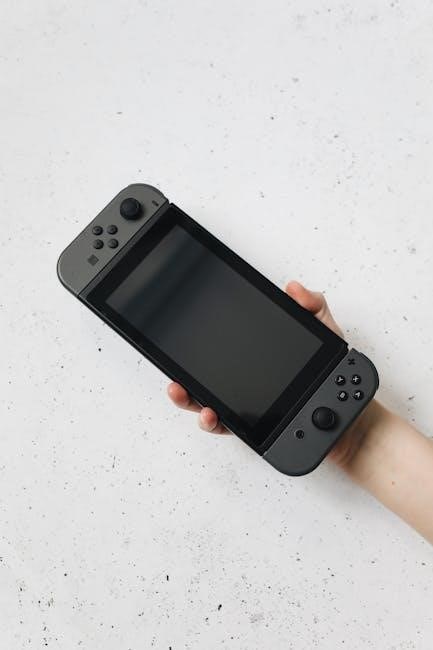
Syncing Issues with Wii Remotes
Wii Remote synchronization problems can disrupt gameplay, but are often easily resolved. Begin by ensuring the Wii console is powered on and the sensor bar is correctly positioned above or below the television screen. Press the red SYNC button located inside the battery compartment of the Wii Remote. Simultaneously, press the red SYNC button on the Wii console itself.
Observe the player indicator lights on both the remote and console; they should blink rapidly during the syncing process and become solid once connected. If syncing fails, move the remote closer to the console and repeat the process. Interference from other wireless devices can sometimes hinder synchronization, so try minimizing nearby wireless activity. Remember to only sync one remote at a time for optimal results.
Low Battery Issues with Wii Remotes
Frequent battery drain in Wii Remotes is a common concern, impacting extended gaming sessions. Ensure you are using fresh, high-quality AA batteries; rechargeable batteries may not always provide sufficient power. Consider the type of gameplay – more vigorous motion control drains batteries faster. If the battery indicator flashes rapidly, it signals an immediate need for replacement.
To maximize battery life, store Wii Remotes in a cool, dry place when not in use. Avoid leaving batteries installed for prolonged periods if the remote isn’t being used, as this can lead to corrosion. Inspect the battery compartment for any debris or corrosion that might interfere with conductivity. Regularly check battery levels before starting a game to prevent interruptions.
Sensor Bar Problems & Fixes
Issues with the Wii Sensor Bar often manifest as inaccurate motion detection or complete loss of tracking. First, verify the sensor bar is securely connected to the Wii console. Ensure nothing obstructs the line of sight between the sensor bar and the Wii Remote – this includes furniture, bright lights, or reflective surfaces. Try repositioning the sensor bar; it should be level with the screen and centered;
If problems persist, test with a different sensor bar if available, to rule out a hardware malfunction. Clean the sensor bar lens with a soft, dry cloth to remove any dust or smudges. Avoid direct sunlight on the sensor bar, as it can interfere with its infrared signals. Finally, confirm the TV is compatible with the Wii’s sensor bar technology.
Sensor Bar Placement & Calibration
Optimal sensor bar placement is crucial for accurate Wii Remote tracking. The bar should be positioned directly above or below the television screen, ideally centered. Ensure it’s level to prevent skewed motion detection. Avoid placing it inside entertainment centers with limited space, as this can restrict the infrared signal’s reach.
To calibrate, navigate to the Wii settings menu and select “Sensor Bar Settings.” Follow the on-screen prompts to confirm the sensor bar is correctly recognized. Recalibration may be necessary if you move the TV or sensor bar. Experiment with slight adjustments to the bar’s position to find the sweet spot for your setup. Remember to minimize ambient light interference during calibration for best results.
System Menu Issues & Recovery
Encountering a frozen system menu can be frustrating, but several recovery options exist. First, attempt a soft reset by pressing the power button on the Wii console for several seconds. If this fails, a hard reset might be necessary – unplug the console from the power outlet for approximately 60 seconds, then reconnect and power it on.
For persistent issues, consider a system recovery. This process, accessible through the Wii’s system settings (if reachable), reinstalls the system menu. Caution: This may erase saved data, so back up important files beforehand if possible. If the system menu is completely inaccessible, specialized recovery tools and guides may be required, often involving a SD card with recovery files.
Recovering from a Frozen System Menu
A frozen Wii system menu is a common issue, often resolvable with a few key steps. Initially, try a soft reset: briefly press the power button. If unresponsive, perform a hard reset by disconnecting the power cable for a full minute, then reconnecting. This forces a shutdown and restart, potentially clearing the freeze.
If the problem persists, system recovery is the next step. This requires an SD card formatted with the Wii System Recovery data (downloadable from Nintendo’s support website). Boot the Wii while holding the Reset button, initiating the recovery process. Important: System recovery may erase saved data, so regular backups are crucial. For severe cases, consult Nintendo’s official support channels for advanced assistance.
Wii Software Updates & Errors
Maintaining your Wii with the latest software is vital for optimal performance and security. However, updates can sometimes fail, leading to errors. If an update halts mid-process, do not power off the console. Attempt a restart; the update may resume. If unsuccessful, a system recovery might be necessary, potentially erasing saved data – highlighting the importance of regular backups.
Common update errors often stem from unstable internet connections. Ensure a secure connection before initiating updates. Corrupted update files can also cause issues; redownloading the update file from Nintendo’s servers is recommended. For persistent errors, consult Nintendo’s support website or contact their customer service for tailored guidance and potential solutions.
Troubleshooting Failed Software Updates
Encountering a failed Wii software update can be frustrating, but several steps can help resolve the issue. First, verify a stable internet connection, as interruptions are a primary cause. If the update consistently fails, try redownloading the update file – a corrupted download can trigger errors. Ensure sufficient free space on your Wii’s internal storage or SD card.
If the system freezes during an update, avoid powering it off abruptly. A forced shutdown could corrupt system files. Instead, attempt a soft reset. If problems persist, consider a system recovery, understanding this may erase saved data. Regularly backing up your data is crucial. Nintendo’s support website offers detailed troubleshooting guides and potential solutions for specific error codes.
Hard Drive/Storage Issues
Addressing hard drive or storage problems on your Wii is essential for maintaining functionality. Insufficient storage space is a common issue, preventing game saves or downloads. Regularly delete unused Virtual Console titles, save data, and channels to free up space. If using an SD card, ensure it’s formatted correctly – FAT32 is the recommended format.
For internal hard drive issues, formatting may be necessary, but remember this will erase all data. Back up important files beforehand. If the Wii fails to recognize the hard drive, check the connection and power supply. Consider testing with a different hard drive to isolate the problem. Always use a compatible hard drive, adhering to Nintendo’s specifications for size and power requirements.
Formatting & Repairing Wii Internal Storage
When encountering persistent issues with your Wii’s internal storage, formatting becomes a crucial step, though it results in complete data loss – back up everything first! Access the System Settings via the Wii Menu, then navigate to System Settings, Storage, and finally, Format System Memory. Follow the on-screen prompts carefully.

If formatting doesn’t resolve the problem, the hard drive might have physical errors. While the Wii doesn’t offer built-in repair utilities, connecting the drive to a computer allows for diagnostic checks using disk repair software. However, proceed with caution, as incorrect usage could worsen the damage. If the drive consistently fails, replacement is often the most practical solution. Ensure any replacement drive meets Nintendo’s compatibility guidelines.
AV/HDMI Connection Problems
Experiencing a blank screen or distorted visuals? Begin by verifying all cable connections – AV cables or the HDMI adapter – are securely plugged into both the Wii and your television. Test different AV ports on your TV to rule out a faulty input. If using an HDMI adapter, ensure it’s a Nintendo-approved model for optimal compatibility.
Next, cycle through the TV’s input sources to confirm the Wii’s signal is being detected. Adjust the Wii’s video output settings (Standard Definition or High Definition) within System Settings to match your TV’s capabilities. A faulty HDMI cable can also cause issues; try a different one. Finally, a power cycle of both the Wii and the television can sometimes resolve temporary connection glitches.
Troubleshooting Video & Audio Output
Dealing with absent or distorted audio and video? First, meticulously check all cable connections – AV cables or HDMI – ensuring they are firmly seated in both the Wii and your television. Experiment with different AV ports on your TV to isolate potential port failures. If utilizing an HDMI adapter, confirm it’s officially licensed by Nintendo for guaranteed compatibility.
Navigate to your TV’s input settings and cycle through available sources to verify the Wii’s signal is recognized. Within the Wii’s System Settings, adjust the video output resolution (480i, 480p, 1080i, or 1080p) to align with your TV’s supported resolutions. A damaged HDMI cable can also be the culprit; substitute it with a known working cable. A complete power cycle of both the Wii console and the television can often resolve temporary signal disruptions.
General Maintenance & Prevention
Proactive maintenance significantly extends your Wii’s lifespan and minimizes potential issues. Regularly clean the exterior of the console and Wii Remotes with a soft, dry cloth to prevent dust buildup. Avoid placing the Wii in enclosed spaces lacking adequate ventilation, as overheating can lead to malfunctions. Ensure the console is positioned on a stable, level surface to prevent accidental falls;
Periodically check for and install any available system updates released by Nintendo, as these often include bug fixes and performance improvements. When not in use, disconnect the power adapter to conserve energy and protect against power surges. Store discs in their cases to prevent scratches and damage. Consistent, careful handling and a clean environment are key to a long-lasting Wii experience.
Keeping Your Wii Clean & Functional
Maintaining a clean Wii is crucial for optimal performance and longevity. Dust accumulation can cause overheating and component failure, so regularly wipe down the console’s exterior with a soft, lint-free cloth. Pay particular attention to the ventilation slots, ensuring they are free from obstruction. Avoid using harsh chemicals or abrasive cleaners, as these can damage the plastic casing.
For the Wii Remote, gently clean the sensor bar and remote surface. Regularly inspect the AV/HDMI cables for damage and ensure secure connections. Proper storage of Wii discs in their cases prevents scratches and read errors. A clean and well-maintained Wii is a happy Wii, ensuring years of gaming enjoyment and minimizing potential troubleshooting needs.